


Worn tension wheel (strap slips during tension, giving weak or inconsistent results)
Strapping Machine Not Tensioning Correctly
If strap tension is too loose, inconsistent, or the machine tightens then relaxes, the cause is usually within the tension/grip components (rollers, grippers, brake/clutch), strap specification, or a control/feedback issue that prevents the tension phase completing properly. The checks below help you confirm whether it’s contamination and slip, wear inside the tension head, or a fault that needs engineer diagnosis.
Common things we see on site
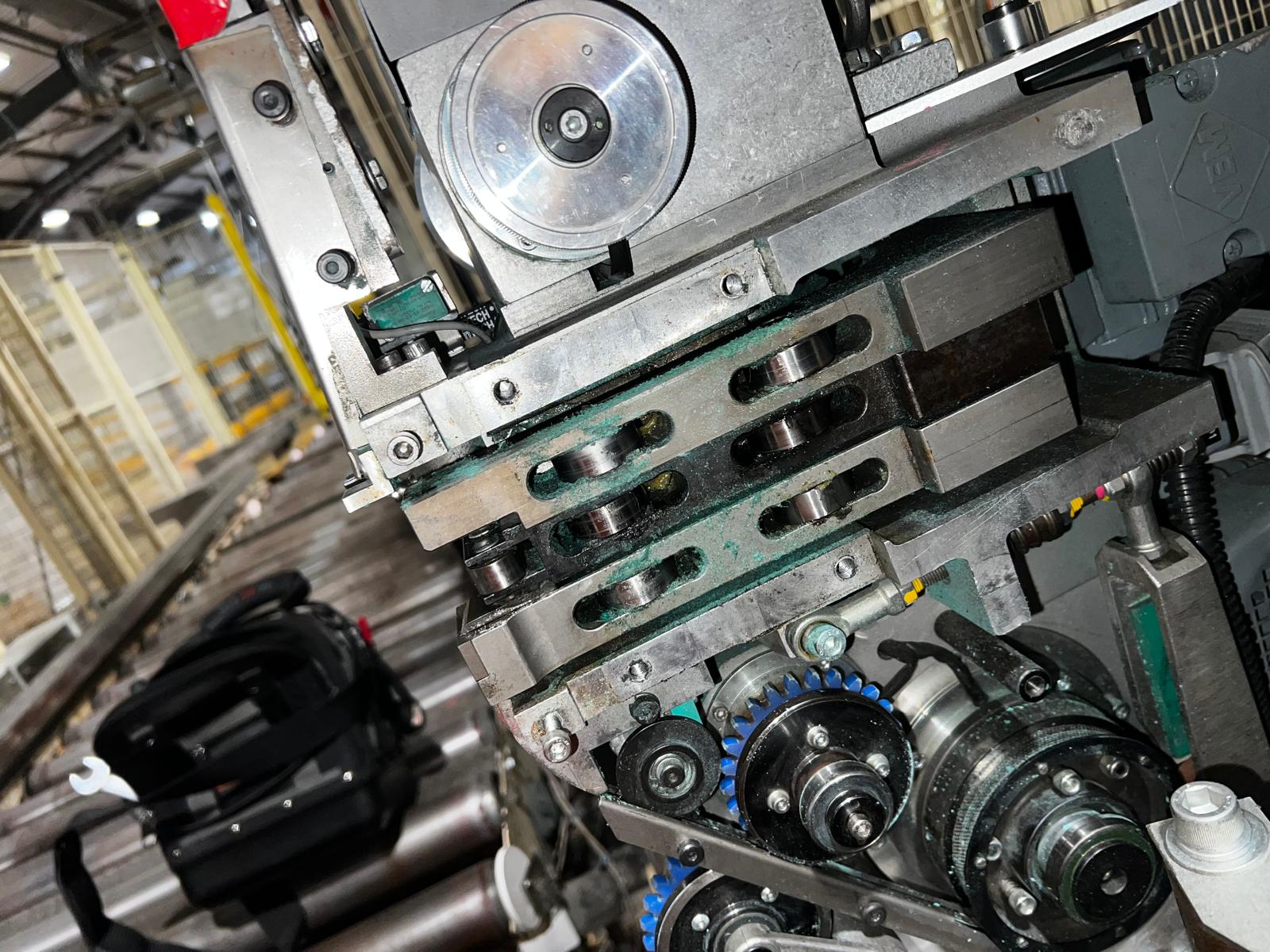
Strap dust contamination (reduces grip and causes tension slip)
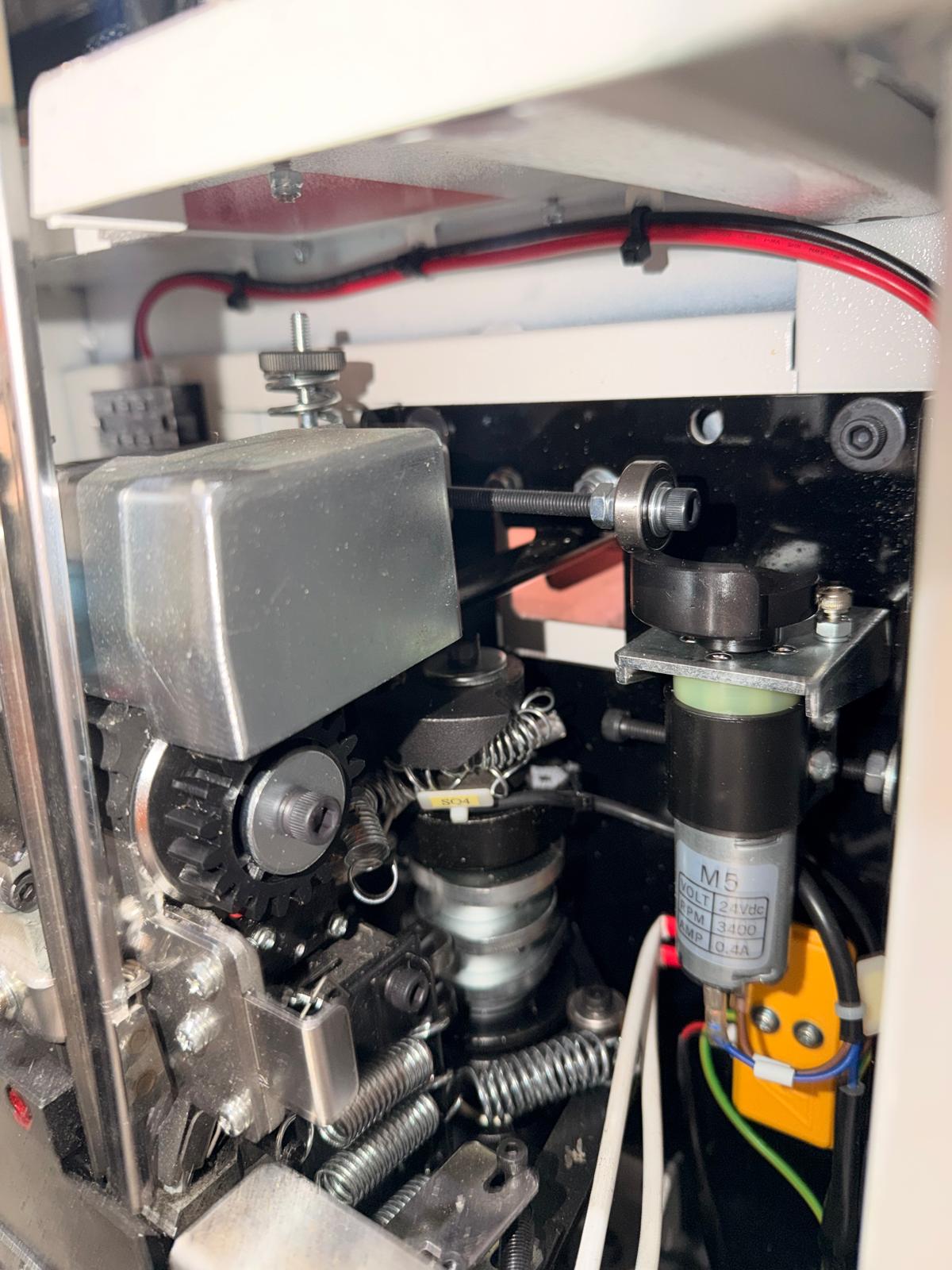
Internal mechanical failure (spring/cam issues can stop proper tension confirmation)
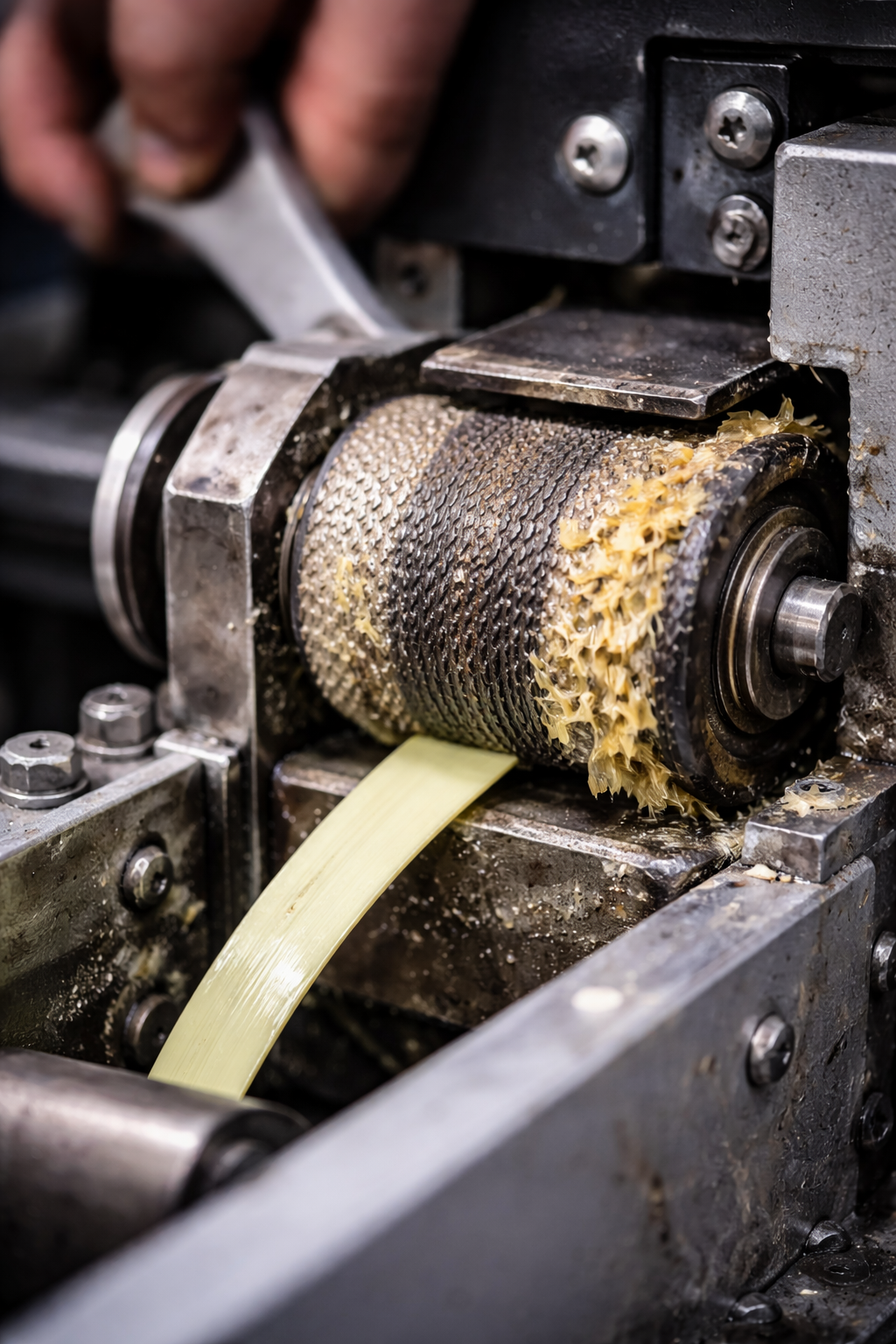
Worn grippers / brake-clutch wear (tensions then relaxes or won’t hold)
Does This Look Familiar?
Common symptoms when strap tension isn’t correct:
- Strap feels loose after the cycle (tension phase not reaching setpoint)
- Tension varies cycle-to-cycle on the same product (slip, contamination, or inconsistent grip)
- Strap tightens then relaxes immediately (brake/clutch or gripper holding issue)
- Strap creases or “pulls through” during tensioning (grip surfaces worn or torque control fault)
- Only happens on certain strap types/widths (strap spec mismatch or incorrect settings)
Typical Causes Behind This Fault
- Worn/contaminated grippers or tension rollers (strap slips during tension)
- Incorrect tension setting for the load/strap type (set too low or not stored in the program)
- Brake/clutch wear (won’t hold tension or releases as the seal cycle starts)
- Tension motor/drive limiting (weak torque, belt/gear wear, or current limiting)
- Incorrect strap specification (width/thickness outside the machine’s setup)
- Tension feedback/sensor fault (position/torque confirmation not achieved)
- Mechanical drag in the strap path (guides/track causing inconsistent pull)
Quick sanity check: If tension is inconsistent, suspect slip/contamination on grippers/rollers.
If it tightens then relaxes, suspect a brake/clutch or holding issue during handover to sealing.
When It Needs An Engineer
If the strapping machine won’t tension correctly after basic checks (correct strap specification, strap path clear, and settings verified), it’s usually quicker to have it diagnosed properly rather than repeatedly adjusting tension and re-cycling the machine.
!
Tension is inconsistent cycle-to-cycle (slip/worn tension rollers)
!
Machine reaches tension then instantly relaxes (brake/clutch or grip issue)
!
Strap keeps “pulling through” or creasing (gripper/motor torque problem)
!
Intermittent tension faults stopping production
At this stage, structured fault-finding is usually more effective than continued tweaks — especially on older or heavily used machines. Most “not tensioning” faults trace back to worn or contaminated tension/grip components, incorrect torque control, or a sensor/sequence issue that prevents the tension phase completing properly. Our engineers work across all major strapping machine brands and control systems.
Service context
Part of our wider Packaging Machine Repair support
This strapping machine fault page sits within our engineer-led, multi-brand Packaging Machine Repair & Breakdown Support.
Request Strapping Machine Support
Send us the machine make/model (if known) and the symptoms you’re seeing. A quick photo of the display or fault helps speed things up.
You’ll get the quickest response by including the fault symptoms and any error message.